



In short
When you procrastinate, you're often avoiding the feeling a task brings up: self-doubt, boredom, or the fear of being judged. Not starting gives you immediate relief, and that relief teaches your brain to avoid the task again next time. More planning and more pressure don't break this cycle. What does help: understanding which feeling you're avoiding, forgiving yourself for putting it off, and starting with a step small enough to take today.
You know the email will take ten minutes. You know the application is almost finished. And yet you clean the kitchen, reply to other messages, and check your phone until the day is over. By the evening, you're thinking: I'm just lazy.
Research on procrastination points in a different direction. Often, the problem isn't the task itself. It's the feeling the task brings up.
It starts with a feeling
Behind many of the things you put off is an uncomfortable feeling. The application feels like a test you might fail. Your tax return is boring and confusing. The message you should have replied to days ago comes with a sense of guilt. Often, you feel it before you've even started, without consciously noticing what's happening.
When you don't start, that feeling goes away for a while. You open something else, and for a moment, you feel better. In psychology, this is known as mood repair: improving how you feel in the short term. Researchers Fuschia Sirois and Timothy Pychyl describe procrastination in much the same way: how you feel right now takes priority over what you want in the long run.1 The relief is real. Your future self pays for it with less time and more pressure.
Why relief keeps you stuck
That relief acts like a reward, and your brain learns from rewards. Every time you avoid a task and feel better as a result, you're a little more likely to avoid it again next time. But of course, the task is still there. The deadline gets closer, and the uncomfortable feeling gets stronger.

Eventually, self-criticism joins in. You tell yourself you're lazy or undisciplined. Now there's another unpleasant feeling attached to the same task: shame. And that makes avoiding it even more tempting. That's how one unanswered email can turn into three weeks of putting it off.
Why planners and habit apps don't help
Most tools for dealing with procrastination focus on the task. They don't change the feeling behind it.
To-do lists and planners
They help you organize the task. But even a perfectly planned task can still feel like a test you might fail.
Habit apps
They add pressure. When you break a streak, frustration or guilt can quickly creep in. Now there's one more unpleasant feeling attached to the task.
Books and podcasts
They give you more information. But most of the time, you already know what you should be doing. Knowing more doesn't automatically change how the task feels.
What helps you get started
If the feeling is part of the problem, that's where it makes sense to start. Four things can help, and none of them require more discipline.
- Name the feeling. Ask yourself what you expect to feel when you start: self-doubt, boredom, fear of criticism, or the fear that you won't be good enough. Once you know what you're trying to avoid, you can deal with it more consciously.
- Forgive yourself for putting it off. In one study of first-year university students, those who forgave themselves for procrastinating while studying for their first exam procrastinated less before the next one.2 Self-criticism, on the other hand, can keep the cycle going.
- Make the first step tiny. Open the document. Write one sentence. Look up one number. A small step feels less threatening. And once you've started, continuing often gets easier.
- Talk about it. Saying out loud what you're avoiding can make it much easier to see what's really behind it. That can work with someone who listens without judging, and it can work with layers.
How layers helps you get started
layers is an AI coach for the moments when you feel stuck. You can talk or write about something you've been putting off for a while. layers keeps asking questions until it becomes clearer what's actually holding you back, then helps you find a first step small enough to take today.
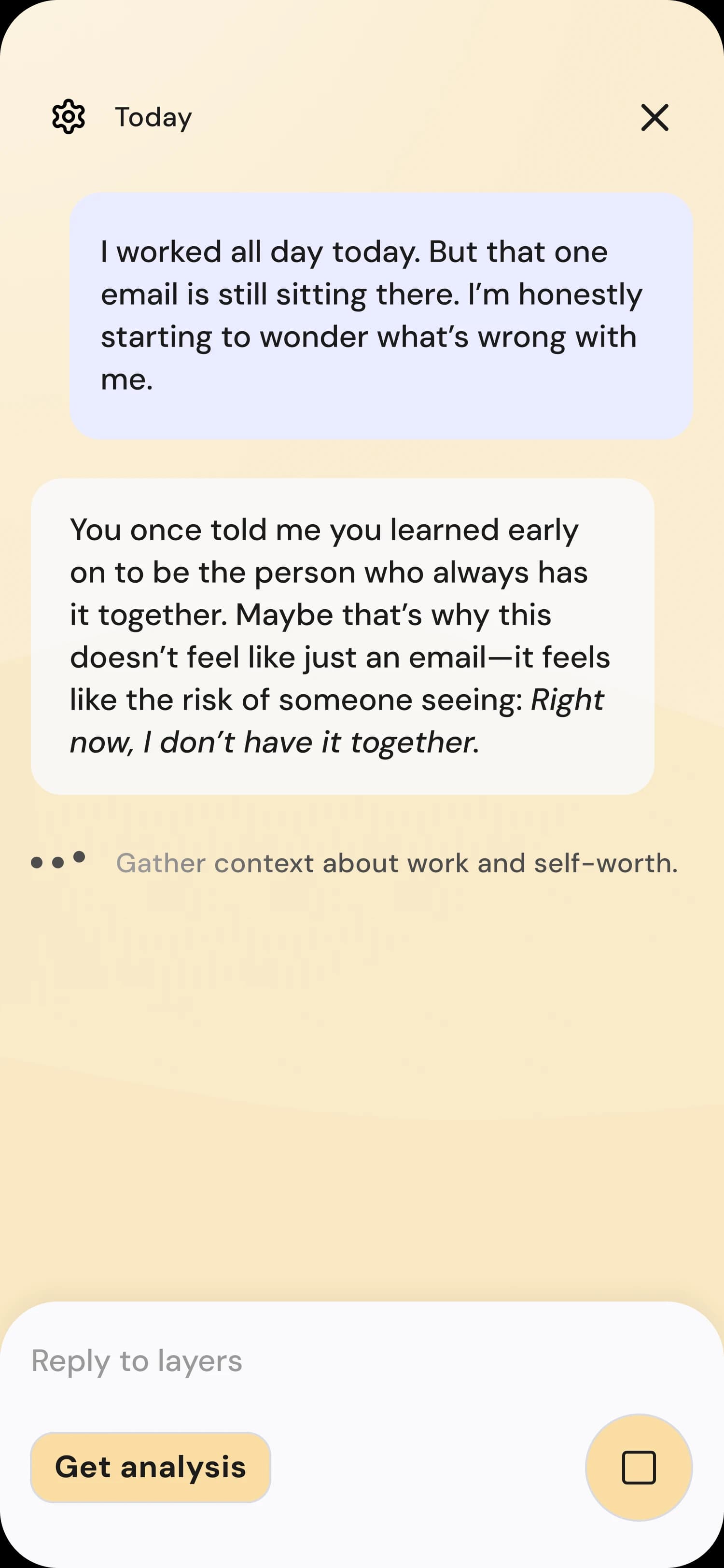
Over time, layers connects what you say today with things you've talked about before. This helps you notice which kinds of tasks keep pulling you into the same pattern, which feelings tend to show up, and when the cycle starts. See how layers works
“I have only used this app for 2 days but it genuinely felt so good after using it. It makes it easy to check in with yourself once in while and not build better habits without feeling overwhelmed. I think I’m gonna make this a part of my daily routine.”
Frequently asked questions
Why do I procrastinate even though I'm not lazy?
Most of the time, you're avoiding a feeling the task brings up: self-doubt, boredom, or the fear of being judged. Not starting gives you a moment of relief. And that relief makes you more likely to avoid the task again next time.
Why don't planners and habit apps help with procrastination?
They focus on the task, not the feeling behind it. Even a perfectly planned task can still feel like a test you might fail. And when you break a streak in a habit app, frustration or guilt can quickly get added to the mix. That can make the urge to keep avoiding the task even stronger.
What can help me start a task I've been putting off?
Name the feeling you expect to have when you start, and forgive yourself for putting the task off until now. Then make the first step as small as possible: open the document or write one sentence. Talking it through — with someone who listens, or with layers — can also help you see what you're actually avoiding.
Sources
- Sirois, F. M., & Pychyl, T. A. (2013). Procrastination and the priority of short-term mood regulation: Consequences for future self. Social and Personality Psychology Compass, 7(2), 115–127.
- Wohl, M. J. A., Pychyl, T. A., & Bennett, S. H. (2010). I forgive myself, now I can study: How self-forgiveness for procrastinating can reduce future procrastination. Personality and Individual Differences, 48(7), 803–808.

Written by
Ole Spaarmann
Ole Spaarmann is one of the founders of layers. He struggled with procrastination for years and decided to build a solution that actually works. He writes about why we get stuck and how to take a first step anyway.